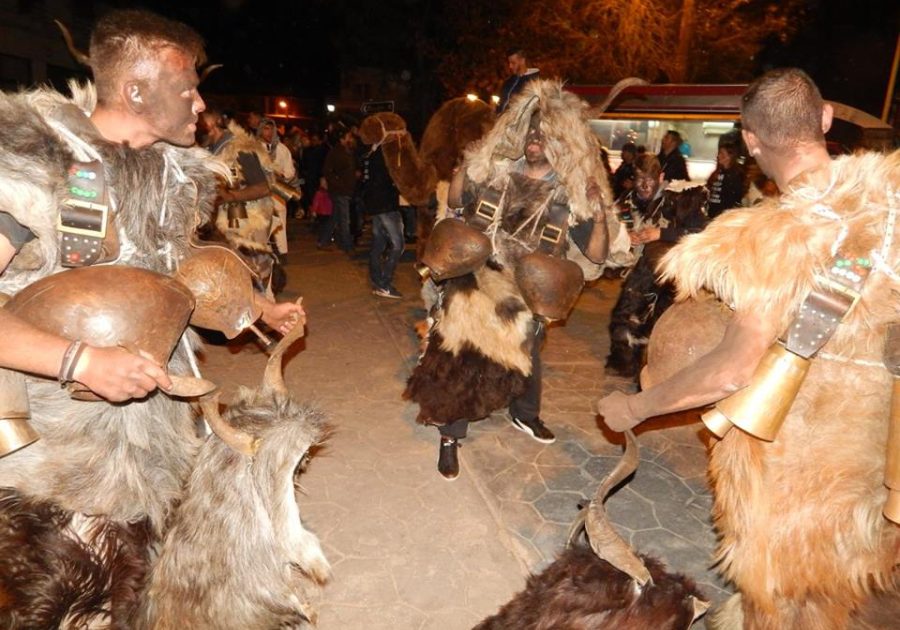


In Petrousa, the “Babiden” is being revived, an event whose roots are lost in the depths of time and aims at good luck, fertility, fruitfulness, and the liberation of the land from the bonds of winter.
From the morning of January 7, a large group begins “the lighting of the village”, as they say. In front go men with smudged faces and the sign of the cross engraved with paint on their foreheads, who constantly drink and dance. The instruments, lyres and dacharedes follow, and behind them, Zacharias the camel with his group. Everyone drinks and dances, wandering the streets of the village, where all its residents participate in this festival of joy. The next day, January 8, the camel group takes another walk through the village, inviting the residents to dance and have fun. The leader of the dance is the so-called ash man, who holds a sock filled with ashes, with which he hits anyone who prevents the dance circle from developing. They are followed by elderly women and elderly men. During the celebration, various representations of scenes from everyday rural life are also performed (sowing, harvesting, etc.). Here too, a satirical representation of a local wedding follows and the feast lasts until late at night, with abundant consumption of tsipouro and “mixed” drinks.
The custom is a fertile and purely female celebration, which is held at the beginning of the new year and coincides with the post-twelve-day period, which is also a carnival period in Northern Greece as it leads to disguises and liberties that are accepted by the entire local society with the expectation of a happy and lucky year.