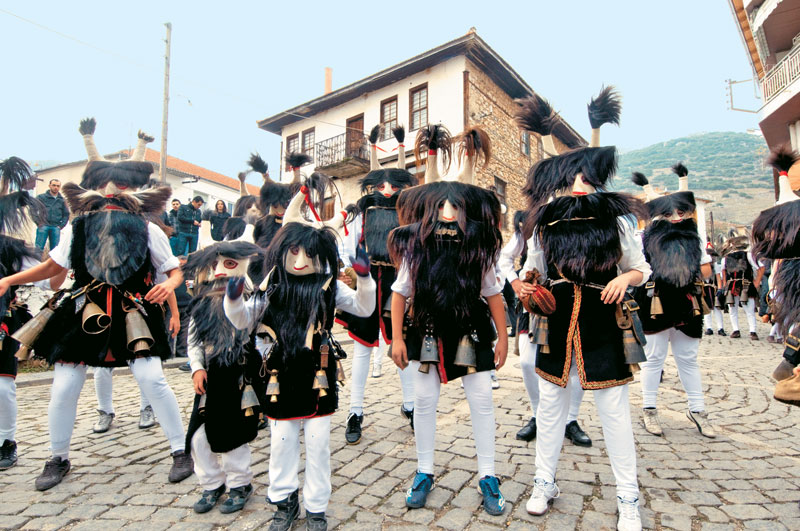


The custom is three days (January 6, 7, 8). In the settlement of Kali Vrysis, at the end of the consecration ceremony, the Babugeras gather outside the church, disguised as animals and wearing five large shepherd’s bells. With their noisy presence they give a completely special tone to the whole scene. Roaming in groups or individually, the Babugeras, in the streets and alleys of the village, hunt those they meet with cheerful teasing, both on the day of Epiphany and the day after Saint John. The wandering in the streets and in the courtyards of modern satyrs will continue until nightfall. Apparently the inhabitants of Kali Vrysis, “the agonians of Bacchus”, as they boastfully call themselves, decided that the cries of the Babugeras were not enough, but added metal bells with their noisy, deafening and piercing sound, which contributes to causing holy rage, so dear to the god Dionysus.
The three-day events in Kali Vrysi culminate with the mock wedding, with the participation in the joy and feast of the entire village and the visitors, who on this day flock to Kali Vrysi. In general, the virtual wedding follows the standard of the paradise wedding. Dressing up of the groom, the bride, mock priest, parodic celebration of the sacrament in the village square with comical advice and wishes from the priest and those watching the “sacrament”. Of course, there is no lack of the bride’s dowry loaded on a well-dressed horse to be accompanied by the relatives of the “newlyweds”. At this point we must point out that the role of the bride is played by a man. This was imposed by the conservative role of the woman, but also by the form of the action, which is dominated by the comic element. The disguise of the man as a woman certainly enhances the comedy of the action, so necessary for the faithful worship of a god identified with entertainment and the joy of life.”
The events take place in the village square.