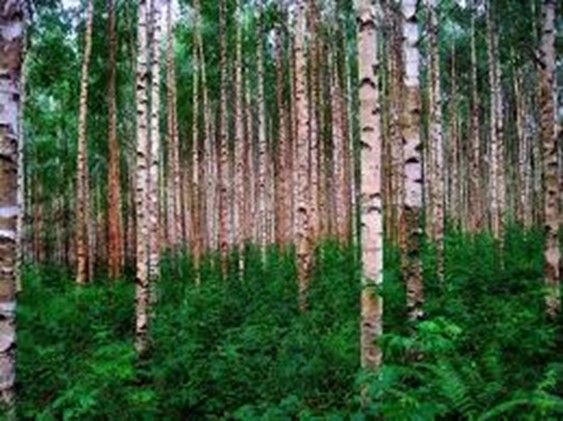


The Simida Forest, protected by the Natura 2000 Convention, covers an area of 67,150 hectares and is part of the Rhodope National Park and the largest pure birch forest in Greece.
It is a rare and beautiful forest, close to the border with Bulgaria, which is a unique habitat due to the existence of the cold-friendly birch tree. The birch tree is a cold-lived, short-lived (80-100 years), deciduous tree with high light requirements, reaching heights of 20-25 m and sometimes even 30 m, and with great colonizing power. Of the 8 species of birch trees in the area, the cream birch is found in the area. The species is widespread in northern and eastern Europe and Siberia.
In the area of the forest there are many ruins of old settlements that have now been abandoned. The birch made its appearance in the area after 1945, when it began to cover the bare areas left behind by the intensive livestock farming of previous years. It is certain that after 30-50 years it will be displaced by the other species to appear elsewhere, and so the forest is kept undisturbed by proper management by the Forestry Department.
The vegetation of the area consists of species that prefer acidic soils. Other trees found here include Scots pine, spruce, beech, alder, leptoak and various species of oak. Recently another type of vegetation has been discovered that is unique in Greece. These are the forests of the grey alder that spread along the banks of small rivers.
The avifauna includes many rare species such as the impressive wild cuckoo, the rare woodcock, the sparrow hawk, the nuthatch and the eagle owl. Of the predators, golden eagles, snake eagles, buzzards, etc. live here. Other important species in the area are the bufflehead, the hoopoe, the dwarf bunting, various species of oak warbler, etc.
The amphibian fauna includes many species, the most important of which are the crested newts, salamanders, toads, green toads and many species of frogs. Of the reptiles, 25 species have been recorded. Bears are a permanent presence in the forests of the area, and wolves are also present. Deer are found in healthy populations and wild geese often take refuge in the forest. The mammalian fauna is complemented by bobcats, wild boars, foxes, weasels, woodcocks, otters, squirrels and many species of bats. Finally, the presence of wild trout in the rivers is important.